
 阅读时间:6 分钟
  浏览量:7560次


Inventory management is the English translation for 库存管理.
一、INVENTORY MANAGEMENT BASICS
Inventory management refers to the process of ordering, storing, and using a company's inventory. This includes the management of raw materials, components, and finished products, as well as warehousing and processing of such items. Effective inventory management is crucial for maintaining the balance between supply and demand, reducing costs, and ensuring that the right products are available at the right time. Here are three key points to understand:
- Efficiency in Supply Chain: Effective inventory management ensures that the supply chain operates smoothly. This means having the right amount of stock to meet customer demands without overstocking or understocking.
- Cost Reduction: Proper inventory management helps in minimizing storage costs and reducing waste. This involves using techniques like Just-In-Time (JIT) inventory, which reduces the holding costs by receiving goods only as they are needed.
- Improved Cash Flow: By optimizing inventory levels, businesses can free up cash that would otherwise be tied up in excess stock. This can be reinvested into other areas of the business to drive growth.
Efficiency in Supply Chain: In-depth, managing inventory efficiently ensures that goods are available when needed, preventing delays in production and delivery. This involves accurate demand forecasting, regular stock audits, and the use of inventory management software to track stock levels in real-time.
二、KEY COMPONENTS OF INVENTORY MANAGEMENT
A、DEMAND FORECASTING
Accurate demand forecasting is essential for effective inventory management. It involves predicting future customer demand based on historical sales data, market trends, and seasonality. This helps businesses to plan their inventory levels and avoid stockouts or overstocking.
B、INVENTORY TRACKING
Inventory tracking is the process of monitoring the quantity, location, and status of inventory items. This can be done using barcode scanning, RFID technology, or inventory management software. Accurate tracking helps in maintaining optimal inventory levels and reducing discrepancies.
C、REORDER POINT FORMULA
The reorder point formula is a key component of inventory management. It determines the level at which new stock should be ordered to avoid running out of items. The formula is:
Reorder Point = (Average Daily Usage * Lead Time) + Safety Stock
This ensures that new stock arrives just in time to replenish the inventory without causing delays.
三、INVENTORY MANAGEMENT TECHNIQUES
A、JUST-IN-TIME (JIT)
Just-In-Time (JIT) inventory management involves receiving goods only when they are needed for production or sales. This reduces holding costs and minimizes waste. However, it requires accurate demand forecasting and a reliable supply chain.
B、ECONOMIC ORDER QUANTITY (EOQ)
The Economic Order Quantity (EOQ) model helps businesses determine the optimal order quantity that minimizes total inventory costs, including ordering and holding costs. The EOQ formula is:
EOQ = √(2DS/H)
Where:
D = Demand rate
S = Order cost
H = Holding cost per unit
C、ABC ANALYSIS
ABC analysis categorizes inventory items into three groups based on their importance:
- A items: High value, low quantity
- B items: Moderate value, moderate quantity
- C items: Low value, high quantity
This helps businesses prioritize their inventory management efforts and allocate resources effectively.
四、BENEFITS OF INVENTORY MANAGEMENT SYSTEMS
A、ACCURACY AND EFFICIENCY
Inventory management systems provide accurate real-time data on stock levels, reducing errors and improving efficiency. This helps businesses make informed decisions and streamline their operations.
B、COST SAVINGS
By optimizing inventory levels and reducing waste, inventory management systems help in achieving significant cost savings. This includes lower storage costs, reduced stockouts, and minimized obsolescence.
C、IMPROVED CUSTOMER SATISFACTION
Effective inventory management ensures that products are available when customers need them, leading to higher customer satisfaction and loyalty. This is critical for maintaining a competitive edge in the market.
五、CHOOSING THE RIGHT INVENTORY MANAGEMENT SYSTEM
When selecting an inventory management system, consider the following factors:
- Scalability: Ensure the system can grow with your business.
- Integration: Look for systems that integrate with your existing software and processes.
- User-Friendliness: Choose a system that is easy to use and requires minimal training.
- Features: Evaluate the features offered by the system, such as real-time tracking, reporting, and automation capabilities.
- Cost: Consider the total cost of ownership, including software, hardware, and maintenance expenses.
六、IMPLEMENTING INVENTORY MANAGEMENT SYSTEMS
Implementing an inventory management system involves several steps:
- Needs Assessment: Identify your business needs and inventory management challenges.
- Vendor Selection: Research and select a suitable inventory management system vendor.
- System Configuration: Configure the system to match your business processes and requirements.
- Data Migration: Transfer existing inventory data to the new system.
- Training: Train your staff on how to use the new system effectively.
- Testing: Conduct thorough testing to ensure the system functions correctly.
- Go-Live: Launch the system and monitor its performance, making adjustments as needed.
总结
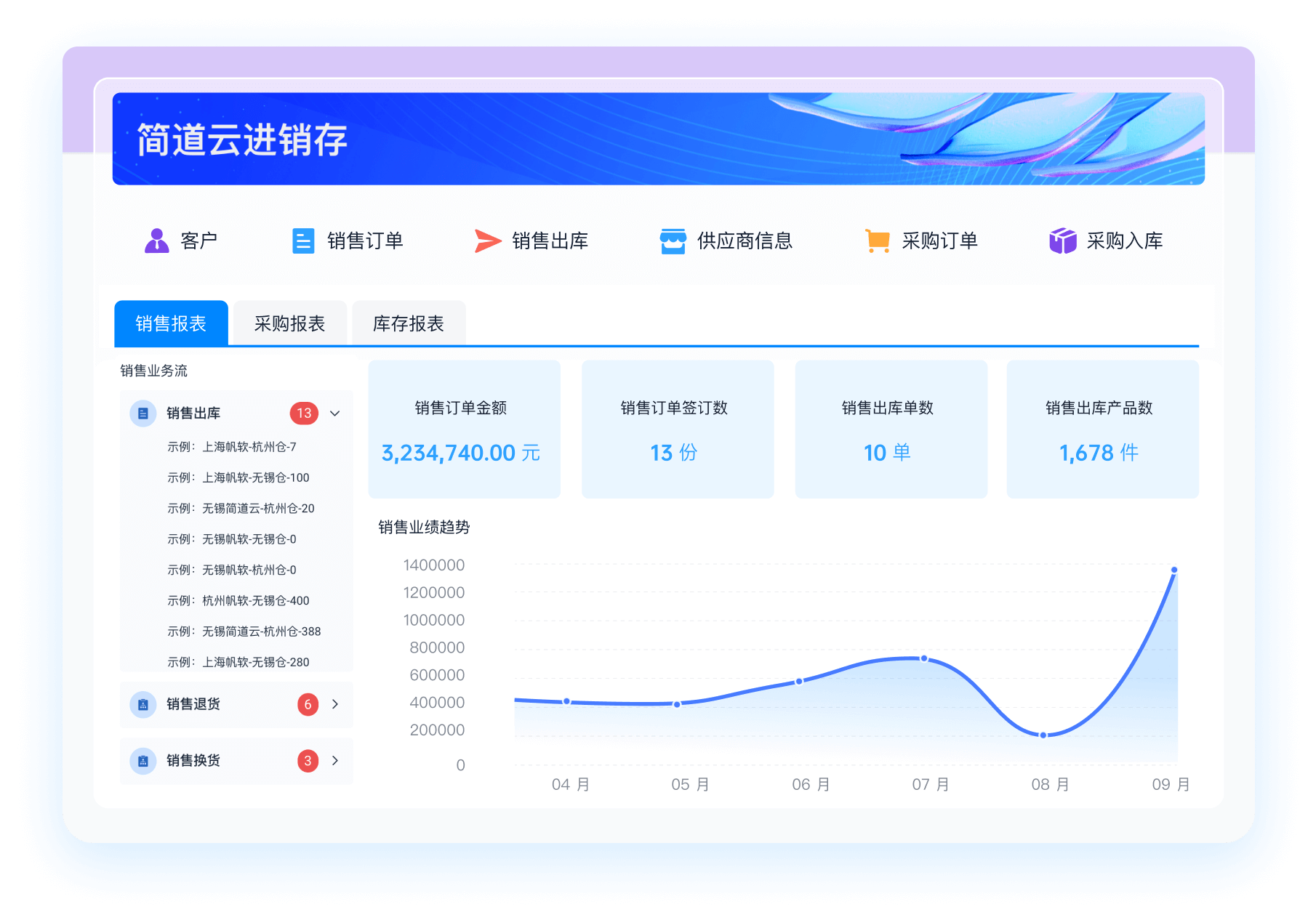
Effective inventory management is crucial for the success of any business that deals with physical goods. By understanding the basics, utilizing key techniques, and implementing the right inventory management system, businesses can achieve significant cost savings, improve efficiency, and enhance customer satisfaction. For those looking to streamline their warehouse operations, the 简道云WMS仓库管理系统模板 is a valuable resource: https://s.fanruan.com/q6mjx;
相关问答FAQs:
库存管理英文翻译怎么写?
库存管理的英文翻译是“Inventory Management”。这个术语在商业和物流领域中广泛使用,涉及对库存的控制、监测和优化,以确保企业在满足客户需求的同时,降低成本和提高效率。
库存管理在企业中的重要性是什么?
库存管理在企业运营中至关重要,主要体现在以下几个方面:
-
满足客户需求:有效的库存管理可以确保产品在需求高峰期能够及时供给,避免因为缺货导致的客户流失。
-
降低成本:通过优化库存水平,企业可以减少存货成本,包括仓储费用和资金占用,从而提升整体利润。
-
提升效率:良好的库存管理系统能够提高订单处理速度,减少人为错误,提升工作效率。
-
数据分析与预测:现代库存管理系统通常配备数据分析功能,帮助企业预测未来的库存需求,做出更明智的采购决策。
如何选择合适的库存管理系统?
选择合适的库存管理系统对企业的运营效率至关重要。以下几点可以帮助企业做出明智的选择:
-
功能需求:根据企业的具体需求选择系统,如实时库存追踪、订单管理、数据分析等功能。
-
用户友好性:系统界面的友好性和易用性对于操作人员的学习和使用至关重要。
-
成本:考虑到系统的初始投资和后续维护费用,选择性价比高的解决方案。
-
客户支持:确保供应商提供良好的客户支持和技术服务,以便在系统使用过程中及时解决问题。
有效的库存管理不仅能提高企业的运营效率,还能增强客户满意度,最终促进企业的可持续发展。




























































 《零代码开发知识图谱》
 《零代码
新动能》案例集
《零代码
新动能》案例集
 《企业零代码系统搭建指南》