
进销存用英语怎么写
-
In English, the term "Inventory Management" is often used to refer to the process of managing the flow of goods into and out of a business. "Inventory" specifically refers to the goods and materials that a business holds for the purpose of resale or for use in the production of goods. "Management" refers to the practices and processes used to control and coordinate the activities related to inventory.
Below is a comprehensive guide to inventory management:
Introduction to Inventory Management
Inventory management involves overseeing the movement and storage of inventory within a business. It includes ordering, storing, and keeping track of inventory levels to ensure that the right amount of stock is available when needed, while minimizing excess holdings that tie up capital. Effective inventory management can help a business reduce costs, optimize operations, and improve customer satisfaction.
The Importance of Inventory Management
Managing inventory effectively is crucial for businesses to operate efficiently and meet customer demand. Key benefits of good inventory management include:
- Cost Control: By accurately tracking inventory levels, businesses can avoid overstocking or stockouts that can lead to unnecessary costs.
- Improved Cash Flow: Efficient inventory management ensures that capital is not tied up in excess inventory, freeing up funds for other investments or operational expenses.
- Better Decision-Making: Having accurate data on inventory levels allows businesses to make informed decisions on purchasing, pricing, and marketing strategies.
- Customer Satisfaction: Maintaining optimal inventory levels helps businesses meet customer demand and deliver products in a timely manner, leading to higher customer satisfaction and retention.
Methods of Inventory Management
There are several methods and techniques used in inventory management to help businesses effectively control and optimize their inventory levels. Some of the commonly used methods include:
1. Just-In-Time (JIT) Inventory Management
Just-In-Time (JIT) inventory management is a system where inventory is ordered and received only when it is needed for production or sale. This method aims to minimize holding costs and reduce waste by ensuring that inventory is delivered "just in time" to meet demand. JIT inventory management requires close coordination with suppliers to ensure timely delivery of materials and products.
2. Economic Order Quantity (EOQ)
Economic Order Quantity (EOQ) is a calculation used to determine the optimal order quantity that minimizes total inventory costs. The EOQ formula takes into account factors such as demand, ordering costs, and holding costs to find the ideal reorder quantity that balances ordering and holding costs. By using EOQ, businesses can avoid stockouts and excess inventory, leading to cost savings and improved efficiency.
3. ABC Analysis
ABC analysis is a method of categorizing inventory items based on their value and importance to the business. Items are classified into three categories:
- A Items: High-value items that make up a small percentage of inventory but contribute a significant portion of revenue.
- B Items: Moderate-value items that have a moderate impact on revenue and inventory costs.
- C Items: Low-value items that represent a large proportion of inventory but contribute minimally to revenue.
By categorizing inventory items based on their importance, businesses can prioritize their management efforts and allocate resources more effectively.
Inventory Management Process
Effective inventory management involves a series of steps and procedures to ensure that inventory levels are optimized and controlled. The inventory management process typically includes the following stages:
1. Demand Forecasting
Demand forecasting involves predicting future demand for products based on historical data, market trends, and other factors. By accurately forecasting demand, businesses can plan their inventory levels to meet customer needs and avoid stockouts or excess inventory.
2. Inventory Planning
Inventory planning entails determining optimal inventory levels based on demand forecasts, lead times, and other factors. Businesses need to consider factors such as safety stock, reorder points, and order quantities to ensure that inventory levels are sufficient to meet demand without incurring excessive costs.
3. Procurement
Procurement involves ordering inventory from suppliers based on demand forecasts and inventory planning. Businesses need to communicate with suppliers, track order status, and ensure timely delivery of materials to maintain optimal inventory levels.
4. Receiving and Inspection
Upon receiving inventory, businesses need to inspect and verify the quality and quantity of goods to ensure that they meet the required standards. Proper receiving and inspection procedures are essential to prevent errors, damages, or discrepancies in inventory levels.
5. Storage and Organization
Proper storage and organization of inventory are critical to maintaining accurate inventory records and efficient operations. Businesses need to utilize appropriate storage methods, such as FIFO (First-In, First-Out) or LIFO (Last-In, First-Out), to ensure that inventory is rotated and used effectively.
6. Inventory Tracking and Control
Inventory tracking involves monitoring and recording inventory movements, including stock receipts, issues, and adjustments. By tracking inventory in real-time and conducting regular audits, businesses can identify discrepancies, prevent stockouts, and optimize inventory levels.
7. Inventory Analysis and Reporting
Inventory analysis involves analyzing key performance indicators (KPIs) related to inventory management, such as turnover rates, carrying costs, and stockouts. Businesses can use this data to identify trends, make informed decisions, and generate reports for management to assess inventory performance.
8. Inventory Optimization
Inventory optimization involves continuously improving inventory management processes to enhance efficiency, reduce costs, and meet customer demand. By identifying areas for improvement, implementing best practices, and leveraging technology solutions, businesses can optimize their inventory operations for long-term success.
Conclusion
In conclusion, inventory management plays a crucial role in the success of businesses by ensuring that the right amount of inventory is available at the right time and place. By implementing effective inventory management practices and utilizing relevant methods and techniques, businesses can streamline operations, reduce costs, and improve customer satisfaction. With proper planning, procurement, storage, and control, businesses can achieve optimal inventory levels and drive sustainable growth in today's competitive market.
In the world of inventory management, attention to detail, accuracy, and efficiency are key factors that can make or break a business. By implementing best practices and utilizing the right tools and techniques, businesses can achieve success in managing their inventory effectively.
2年前 -
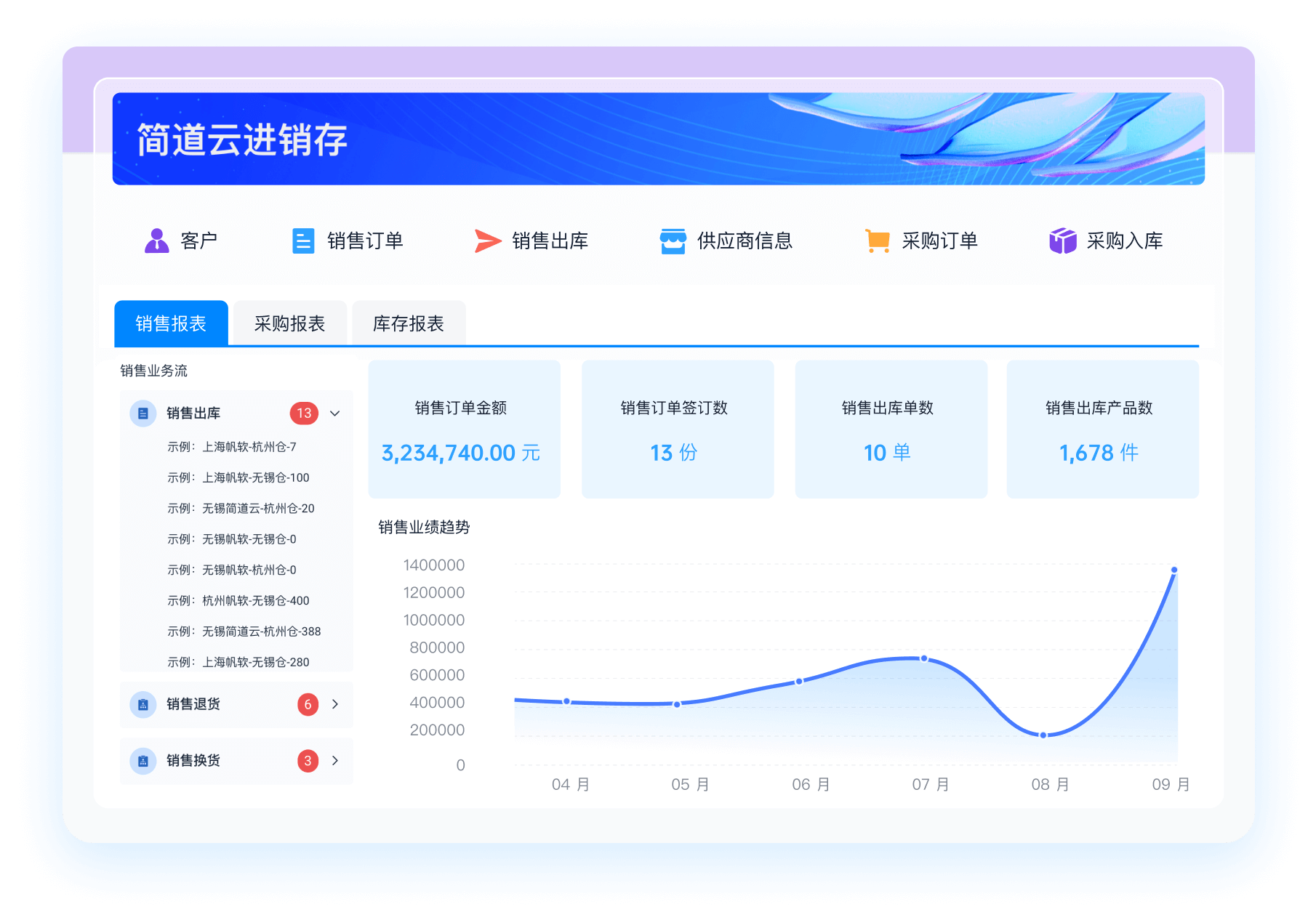
Inventory management, purchasing and sales
2年前 -
Inventory management
2年前














































 《零代码开发知识图谱》
 《零代码
新动能》案例集
《零代码
新动能》案例集
 《企业零代码系统搭建指南》











领先企业,真实声音
简道云让业务用户感受数字化的效果,加速数字化落地;零代码快速开发迭代提供了很低的试错成本,孵化了一批新工具新方法。
郑炯蒙牛乳业信息技术高级总监
简道云把各模块数据整合到一起,工作效率得到质的提升。现在赛艇协会遇到新的业务需求时,会直接用简道云开发demo,基本一天完成。
谭威正中国赛艇协会数据总监
业务与技术交织,让思维落地实现。四年简道云使用经历,功能越来越多也反推业务流程转变,是促使我们成长的过程。实现了真正降本增效。
袁超OPPO(苏皖)信息化部门负责人
零代码的无门槛开发方式盘活了全公司信息化推进的热情和效率,简道云打破了原先集团的数据孤岛困局,未来将继续向数据要生产力。
伍学纲东方日升新能源股份有限公司副总裁
通过简道云零代码技术的运用实践,提高了企业转型速度、减少对高技术专业人员的依赖。在应用推广上,具备员工上手快的竞争优势。
董兴潮绿城建筑科技集团信息化专业经理
简道云是目前最贴合我们实际业务的信息化产品。通过灵活的自定义平台,实现了信息互通、闭环管理,企业管理效率真正得到了提升。
王磊克吕士科学仪器(上海)有限公司总经理