
 阅读时间:8 分钟
  浏览量:6117次


Inventory management data is the term used to refer to the information and metrics related to the tracking, control, and oversight of inventory within a business. This includes data on stock levels, order statuses, product locations, and other relevant metrics that are essential for efficient warehouse and supply chain management.
I、IMPORTANCE OF INVENTORY MANAGEMENT DATA
-
Accuracy in Stock Levels: Precise inventory data helps businesses maintain accurate stock levels, preventing overstocking or stockouts. Overstocking ties up capital and increases storage costs, while stockouts can lead to lost sales and dissatisfied customers.
-
Improved Order Fulfillment: Accurate inventory management data ensures that orders are fulfilled promptly and correctly. This enhances customer satisfaction and can lead to repeat business. For example, a company using real-time inventory data can quickly locate and ship products, reducing delivery times.
-
Cost Reduction: Effective inventory management data helps in identifying slow-moving or obsolete stock, allowing businesses to minimize waste and reduce holding costs. By analyzing this data, companies can make informed decisions about markdowns or promotions to clear excess inventory.
-
Enhanced Forecasting: Historical inventory data enables better demand forecasting, helping businesses plan for future stock needs more accurately. This leads to more efficient purchasing and production schedules, aligning supply with demand.
-
Operational Efficiency: Streamlined inventory management processes, supported by accurate data, improve overall operational efficiency. This includes faster stock audits, easier compliance with regulations, and more efficient warehouse operations.
II、KEY COMPONENTS OF INVENTORY MANAGEMENT DATA
- Stock Levels: Current quantity of each product available in the warehouse.
- Order Statuses: Tracking of orders from placement to fulfillment.
- Product Locations: Detailed information on where each product is stored within the warehouse.
- Lead Times: Data on the time taken from ordering to receiving stock.
- Turnover Rates: Frequency at which inventory is sold and replaced over a specific period.
- Demand Patterns: Historical data showing how product demand fluctuates over time.
III、TECHNOLOGIES AND TOOLS FOR INVENTORY MANAGEMENT DATA
Businesses use various technologies to manage inventory data effectively:
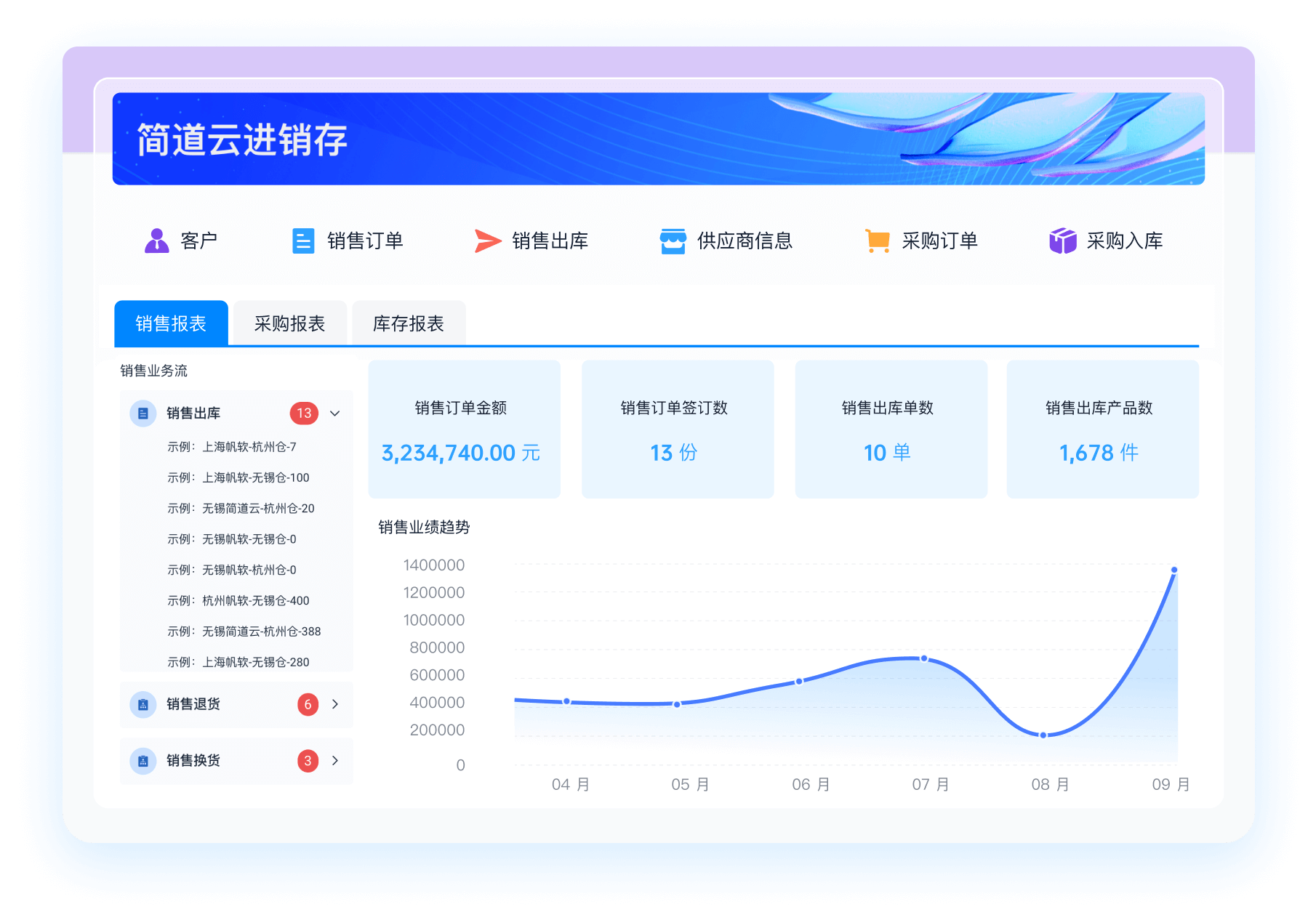
- Warehouse Management Systems (WMS): These systems provide real-time data on inventory levels, locations, and movements. For instance, 简道云WMS仓库管理系统 is a popular choice for many businesses.
- Enterprise Resource Planning (ERP) Systems: Integrate inventory data with other business processes, providing a holistic view of operations.
- Barcode Scanners and RFID: Automate data capture and reduce manual entry errors.
- Inventory Management Software: Tools like Zoho Inventory, TradeGecko, and others offer advanced features for tracking and analyzing inventory data.
IV、IMPLEMENTING EFFECTIVE INVENTORY MANAGEMENT DATA PRACTICES
To leverage inventory management data effectively, businesses should:
- Regularly Update Data: Ensure that inventory data is updated in real-time to reflect current stock levels and movements.
- Train Staff: Provide training for employees on the importance of accurate data entry and the use of inventory management tools.
- Conduct Regular Audits: Perform routine inventory audits to verify data accuracy and identify discrepancies.
- Analyze Data Trends: Regularly analyze inventory data to identify trends, forecast demand, and adjust inventory levels accordingly.
- Utilize Automation: Implement automated systems for data capture and processing to reduce errors and improve efficiency.
V、CHALLENGES IN MANAGING INVENTORY DATA
- Data Accuracy: Ensuring data accuracy can be challenging due to human errors, system glitches, or incomplete data entry.
- Integration: Integrating inventory data across different systems and departments can be complex but is essential for a unified view.
- Scalability: As businesses grow, their inventory management systems need to scale accordingly to handle increased data volumes.
- Data Security: Protecting sensitive inventory data from unauthorized access and cyber threats is critical.
VI、CASE STUDY: SUCCESSFUL INVENTORY MANAGEMENT DATA IMPLEMENTATION
Company X: A mid-sized retail company implemented a new WMS integrated with their existing ERP system. By using real-time inventory data, they reduced stockouts by 30%, improved order fulfillment times by 25%, and decreased holding costs by 15%. The key factors in their success included staff training, regular data audits, and the use of automation for data entry and processing.
In conclusion, inventory management data is crucial for maintaining accurate stock levels, improving order fulfillment, reducing costs, and enhancing operational efficiency. By implementing effective practices and utilizing advanced technologies, businesses can optimize their inventory management processes and achieve better overall performance. For more information on warehouse management systems, visit the 简道云WMS仓库管理系统模板.
相关问答FAQs:
库存管理数据的英文表达是“Inventory Management Data”。在库存管理的领域,这个术语通常指的是与库存相关的各类信息和数据,包括库存数量、库存周转率、库存成本、库存流动性等。这些数据对于企业的供应链管理和运营效率至关重要。
库存管理数据的分析可以帮助企业优化库存水平,提高客户满意度,并减少库存持有成本。通过使用现代的库存管理系统,企业能够实时追踪库存状态,并做出更加精准的决策。
如果您还有其他相关问题,欢迎继续提问!






























































 《零代码开发知识图谱》
 《零代码
新动能》案例集
《零代码
新动能》案例集
 《企业零代码系统搭建指南》