
 阅读时间:7 分钟
  浏览量:6155次


Inbound and Outbound Statistics
-
Inbound and Outbound Statistics refer to the data and metrics related to the movement of goods into and out of a warehouse or storage facility. Specifically, this encompasses the recording, tracking, and analysis of inventory items that are received (inbound) and those that are shipped out or dispatched (outbound).
-
Detailed Description:
- Inbound Statistics: These are metrics that track the quantity, type, and timing of goods received into the warehouse. This can include data on suppliers, purchase orders, delivery schedules, and the efficiency of the receiving process.
- Outbound Statistics: These metrics monitor the movement of goods out of the warehouse. This includes information on sales orders, shipping schedules, customer destinations, and the accuracy and timeliness of the dispatch process.
I、 INBOUND STATISTICS
Key Metrics to Track:
- Quantity Received: The total number of units received during a specific period.
- Receiving Accuracy: The percentage of goods received without discrepancies or damages.
- Supplier Performance: Evaluating suppliers based on delivery timeliness and condition of goods.
- Processing Time: The time taken from the arrival of goods to their placement in storage.
Importance:
- Inventory Management: Accurate inbound statistics ensure that inventory levels are correctly updated, preventing stockouts or overstock situations.
- Supplier Evaluation: Tracking supplier performance helps in negotiating better terms and improving supply chain efficiency.
- Operational Efficiency: By analyzing processing times, warehouses can identify bottlenecks and improve receiving operations.
II、 OUTBOUND STATISTICS
Key Metrics to Track:
- Order Fulfillment Rate: The percentage of orders shipped on time and in full.
- Shipping Accuracy: The accuracy of order picking and packing, ensuring customers receive what they ordered.
- Lead Time: The time taken from order placement to dispatch.
- Customer Satisfaction: Feedback and ratings from customers regarding the delivery process.
Importance:
- Customer Satisfaction: Timely and accurate deliveries lead to higher customer satisfaction and repeat business.
- Cost Management: Efficient outbound processes reduce shipping errors and associated costs.
- Performance Monitoring: Tracking outbound statistics helps in assessing the efficiency of the warehouse operations and identifying areas for improvement.
III、 IMPLEMENTATION IN WMS SYSTEMS
Steps to Implement Inbound and Outbound Statistics in a WMS:
- Data Collection: Use barcode scanners, RFID, and other technologies to automatically collect data on inbound and outbound movements.
- Integration: Ensure the WMS integrates with other systems like ERP and TMS for seamless data flow.
- Reporting: Generate real-time reports and dashboards to monitor key metrics.
- Analysis: Use data analytics tools to analyze trends, identify issues, and make informed decisions.
Example:
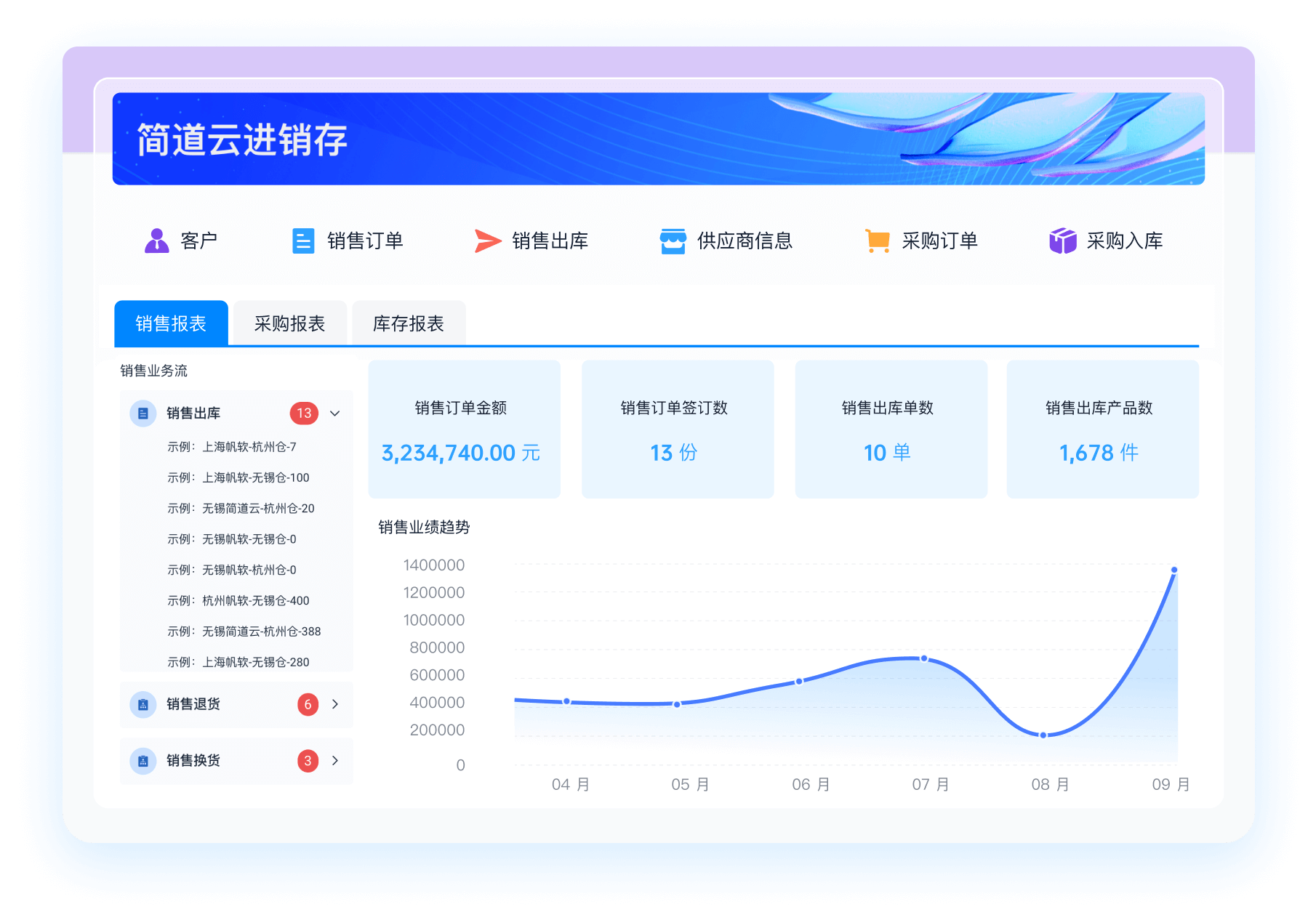
The 简道云WMS仓库管理系统 offers robust features for tracking inbound and outbound statistics. By leveraging this system, businesses can improve their inventory management, enhance operational efficiency, and provide better customer service.
For more details, visit the official website: https://s.fanruan.com/q6mjx;
IV、 CONCLUSION
In conclusion, Inbound and Outbound Statistics are crucial for effective warehouse management. They provide insights into inventory levels, supplier performance, and operational efficiency, leading to better decision-making and improved customer satisfaction. Implementing these statistics in a WMS, such as the 简道云WMS仓库管理系统, can significantly enhance the overall performance of warehouse operations. Businesses should continuously monitor and analyze these metrics to stay competitive and meet customer expectations.
相关问答FAQs:
出入库统计英文怎么写?
出入库统计在英文中通常翻译为“Inventory In and Out Statistics”或“Stock In and Out Statistics”。这个术语在仓库管理和物流领域被广泛使用,指的是对仓库中物品进出情况的记录和分析。它包括了对库存商品的入库、出库以及当前库存水平的统计和监控。
出入库统计的主要内容有哪些?
出入库统计主要包括以下几个方面的内容:
-
入库统计:记录每一项商品的入库时间、数量、供应商信息等。这部分数据有助于了解仓库的补货情况以及各类商品的流转速度。
-
出库统计:记录商品出库的时间、数量、客户信息等。这部分数据有助于分析销售情况和客户需求,同时也能为库存管理提供支持。
-
库存监控:通过对入库和出库数据的分析,实时监控库存水平,避免库存过多或过少的情况出现。
-
数据分析与报告:定期生成出入库统计报告,帮助管理层做出更合理的库存决策,提高仓库运营效率。
如何进行出入库统计?
进行出入库统计的步骤包括:
-
数据收集:通过条形码扫描或手动输入,记录每一笔入库和出库的数据。
-
数据整理:将收集到的数据进行整理,分类别、按时间顺序排列,确保数据的准确性和完整性。
-
数据分析:利用统计软件或仓库管理系统对整理后的数据进行分析,识别出入库的高峰期、畅销商品、滞销商品等。
-
报告生成:根据分析结果,生成统计报告,便于管理层进行决策参考。
-
持续监控:建立出入库统计的常态化管理机制,确保随时能够掌握库存动态,及时调整库存策略。
通过以上步骤,可以有效地管理和控制仓库的出入库情况,提高仓库的运营效率,降低运营成本。
如需进一步了解仓库管理系统的相关信息,简道云WMS仓库管理系统模板提供了便捷的在线使用方式,详情请访问: https://s.fanruan.com/q6mjx;。

































































 《零代码开发知识图谱》
 《零代码
新动能》案例集
《零代码
新动能》案例集
 《企业零代码系统搭建指南》